When you tell people you're going to be a writer, undoubtedly many of them will tell you, "Don't quit your day job."
Don't listen to them. QUIT your day job.
Then get a much BETTER one.
It is true you likely won't earn much as an author and will thus need to supplement your writing income. But you can do better than your current day job. You just don't know it yet.
The trouble with most regular jobs is the hours are long and the pay ranges from laughable to lackluster. As an author, you need a lot of time to write and rewrite, and a lot of money to cover your drinking expenses and the costs associated with self-publishing after you fail to land an agent and publisher. Doing the 9-to-5 thing (or some uninspired variation of it) will provide you with neither enough time nor enough money. Plus most traditional jobs are boring and soul-crushing, leaving you with little energy and enthusiasm to create anything worth reading or making a Netflix series out of.
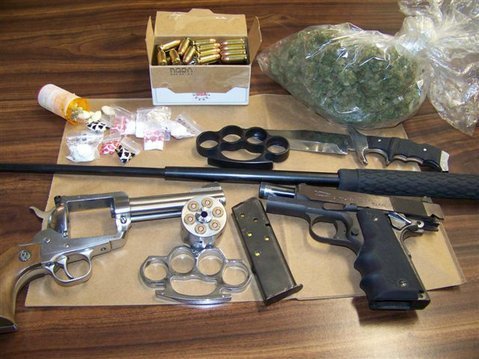
Below I’ve listed five nontraditional jobs that are ideal for authors looking to easily make ends meet. All feature minimum work for maximum pay, provide highly flexible scheduling, and require no formal degrees or certificates. Also, the exciting and risky nature of the jobs themselves will provide plenty of captivating fodder for books.
Now, it should be noted that if you get caught doing any of these jobs (with the exception of one), you will go to prison. But don’t sweat it. In prison you’ll gain even more book fodder and time to write. You simply can’t lose.
And now, on to what I consider some of the best possible day* jobs for authors. (*Most of these jobs are best done at night.)
Bank Robber. Had he been literate, Jessie James could have crushed it as a novelist. Bank robbers work only one or two days a month and make over a million dollars an hour—almost as much as J.K. Rowling. With that kind of free time, you could write a novel every two weeks—almost as many as Stephen King. Key qualifications for the job of Bank Robber include a cool temperament, a steady hand, and a ski mask. It also helps to know the bank’s hours.
Jewel Thief. This job is just as lucrative and time-efficient as Bank Robber, and requires many of the same attributes and ski masks. The big difference is that a jewel thief needs much less upper-body strength, as a handful of diamonds weighs a lot less than sacks full of cash. This is good news for writers who struggle to get to the gym between bouts of writing and drinking. In other words, nearly all authors.
Drug Dealer. Fortunately for writers, more than half the world’s population today is as depressed and as unstable as they are. This means the demand for narcotics and other controlled substances is higher than ever. As a drug dealer, an author can make a fortune working just a couple of hours a day, then spend the rest of the day sampling their own product and working on their novel. As an added bonus, having immediate access to painkillers is great for helping authors handle the agony of constant rejection and poor book sales.
Hitman (or woman). Most authors would kill for more time to write, and that’s exactly what they’d be doing in this job. An average hit takes only a few hours to prepare for and complete, and fetches between $25K-$50K. So by doing just one hit a month, an author will earn enough to almost cover the PR costs for promoting their latest novel. Two hits a month, and they can start thinking about bribing Kirkus to write a favorable book review.
Professional Escort. If going on dates and sleepovers is more appealing to you than killing or stealing, then this is likely the best job for you on the list. Escorts can earn $15K-$30K a month just by accompanying lonely rich people to parties, social events and private sex dungeons a few times a week. Good money, plenty of free time to write, and, if you decide to write about your actual experiences, the chance to blow the shitty Fifty Shades of Grey out of the water in the erotica market. The only drawback is that escorting is legal in all 50 U.S. states, which means there’s no chance you’ll get to go on a prison-based writing retreat.
NOTE: I, myself, am currently considering getting a job in one of the fields mentioned above. The only other viable alternative is for you and everyone you know to buy my books.
I’ve been surrounded by loving and supportive family members, friends and teachers all my life. I blame all of them for what has happened.
Me becoming a writer.
These people really have no excuse – they could have steered me toward a more lucrative profession where poor hygiene and substance abuse is frowned upon. But no, they chose to encourage me to explore my natural talents, to put my words on paper and on computer screens and on blogs. They chose to let me continue down the dark and lonely path of an author of fiction, just because they saw how happy it made me.
The bastards.
It would take me days to name EVERYONE responsible for me becoming a writer. So, in the interest of time and space, here’s a list of just the main culprits:
My parents. Oh sure, my mother may have hinted at me becoming a doctor or a lawyer when I was a child, but we’re Jewish, so she was just following the rules. Doesn’t count. Her big mistake was not insisting I become a doctor or lawyer. Instead, she and my father would read wonderful stories to me at bedtime, buy me amazing books to read myself, pat me on the back and say “Great work!” when they’d read my book reports and other writing projects for school. They paid for me to get a liberal arts education in college, and afterward bought me my first PC so I could easily write and save all my essays, poems and stories. I’m not sure if I’ll ever forgive them. Unless my novels start hitting the bestseller list.
Dr. Seuss. Theodor Geisel, you son of a bitch. Why did you have to make words and stories so enchanting and strange and fun? I was hooked from the very first time I opened Horton Hears A Who, and I’ve never looked back. I can only imagine how many other lives you’ve ruined.
All my English teachers and professors. Some people are fortunate enough to get assigned to English teachers who are burnt out and bitter, who inspire no one and who ensure that students quickly lose interest in reading and writing. Not me. I was cursed with one passionate and supportive English teacher after another, all the way up through college. They introduced me to the likes of Hemingway and Fitzgerald and Faulkner and Nabokov and Chekhov and Whitman and Plath. Buy the time I graduated, it was too late to reverse all the damage that had been done. I was condemned to live a life of creativity, self-expression and bathing only occasionally.
Woody Allen. Woody’s been accused of a lot of things, but what I blame him for most is inspiring me to write comedic prose with an existential bent. (Big future in that.) I discovered his books of hilarious short stories (Without Feathers, Side Effects, and Getting Even) my senior year of college, and realized I had a similar voice inside me. Once I started writing humorously absurd tales, I couldn’t stop – even when my friends and the editors at The New Yorker and The Atlantic begged me to. Turns out it’s a lifelong affliction. Lucky for everyone.
Gordon MacPherson. Gordon was my boss at my first real job (as an editor/writer for a trade publication) and the one person who really had a chance to dash my silly writing dreams soon after college. But no, he instead praised my efforts and potential, bought me books on writing better, paid a writing coach to help me thrive, and even gave me my own humor column in the company’s publication. I hope you’re proud of yourself, Gordon. I’ll see you in Hell.
Chuck Palahniuk. While Woody Allen is to blame for my desire to keep things light, Chuck Palahniuk is to blame for my desire to make things dark. Their combined influence is the reason why I insist on writing comedies about stuff like terminal illness, euthanasia, murder and sex trafficking. I blame Chuck more than I blame Woody. Woody merely got me addicted to making people die laughing; Chuck got me addicted to making people die, period. Plus, Chuck’s an enabler – twice he’s liked something I’ve tweeted; Woody, on the other hand, has ignored all my letters, emails, calls and faxes.
My wife. My wife, Miranda, isn’t to blame for me becoming a writer. She’s to blame for me continuing to be one. That’s worse. To get me to stop, all she has to do is belittle me for my laughable royalties, tell me real men don’t sit around in their pajamas playing with imaginary friends, and withhold sex. But noooo, she instead wholeheartedly believes in my so-called talent, tells me to keep writing and to be patient, insists I’m on the brink of something big with my literary career, and, for whatever reason, still sleeps with me (though, in her defense, only after she’s had multiple glasses of wine). I mean, come on – what kind of woman WANTS her husband to be a writer?
I don’t know what YOU’RE giggling about; you, too, are partially to blame for all this. After all, you just read my blog post all the way to the end. Don’t you know that only encourages me?
As a kid in school, writing caused me great discomfort. Now, as an adult, NOT writing does.
Sure, I can usually make it two or three days without working on a novel or a blog post or a suicide note, but after that I absolutely MUST write. Or pop some OxyContin. Preferably both.
I totally get what Franz Kafka meant when he famously said, “A non-writing writer is a monster courting insanity.” (Granted, he was being a little dramatic, but what do you expect from a man whose most famous story is about a guy who turns into a giant insect during an existential crisis?) Even when I’m on vacation in paradise with my beautiful wife, I need to scratch out a page here and there to keep the crazy away. Too much sun and surf and relaxation terrifies me.
So why is that? What exactly is it that compels me and many others to write… and novels, no less? I’d like to think it’s because I’m a passionate artist. But according to George Orwell, it’s because I’m a masochistic psychopath:
“Writing a book is a horrible, exhausting struggle, like a long bout of some painful illness. One would never undertake such a thing if one were not driven on by some demon which one can neither resist nor understand.“
So, if Kafka’s correct, I’ll go crazy if I don’t write. But if Orwell’s correct, I’m crazy if I DO write.
But the REALLY crazy thing is, they’re both right.
So the next time an author tells you they write for the pure joy of it, call bullsh*t.
Tell them you know about the monsters and the demons.
Tell them you know about the Kafka/Orwell paradox.
Tell them you know the pain of writing a book is exceeded only by the agony of leaving the pages blank.
If you’re a writer—particularly if you’re a fiction writer, or a poet (you poor thing)—you know how it feels to work your creativity to the bone for little reward.
You can change all that. All you need is a little self-deception.
The trouble with many of us writers is we set challenging and often unrealistic goals, expectations and standards with regard to our work and our financial gains related to it. We all aim to create books of Cormac McCarthy-type quality and rake in J.K. Rowling-type sales figures. And when we inevitably end up falling ridiculously short, we brood, question our talent, and seriously consider pawning our laptop and thesaurus.
There’s no need for us writers to be so hard on ourselves. Leave that to literary agents and publishers, and to readers who comment on our Amazon page after we self-publish. What we need are a few easy wins, a couple of small accomplishments, to help inspire us to keep fighting the good fight and writing the good (or at least mediocre) write.
What we need is to lower the bar a bit.
With that in mind, following are some slightly less lofty goals, expectations and standards to shoot for going forward:
Write one hundred words a day. Stop being so ridiculously ambitious with your one thousand or two thousand words-a-day goal. All that does is leave you burnt out and disappointed. Now, a hundred words a day … that’s something you could do in your sleep, leaving you with a lot more time during the day to get drunk in celebration of your achievement.
Receive personalized rejection notices. Enough with your pipe dream of having a literary agent tell you she/he is interested in your novel. Just be happy when you get a rejection notice that actually includes your full name and the title of your book that will never get representation. Most agents these days either completely ignore queries or reject them with a form letter, so yeah, you’d better be proud when you get personally spurned. It means you’ve almost come close to making it.
No more than one typo… per page. With all the distractions of Facebook and Twitter and Instagram and Tinder, nobody can expect a writer to write totally clean copy, or even to catch their grammatical and spelling errors during the editing process. If you can keep your typos down to just one per manuscript page, you deserve a pat on the back and have earned the right to continue wasting valuable time on social media and dating apps.
Sell more than one copy the first week. All your friends and relatives and people you corner at gatherings and the grocery store will express tremendous interest in your novel, but only .001 percent of them will actually buy it. Knowing this going in will save you lots of disappointment and self-harm. Now, certainly your own mother or father (though probably not both) will buy your book immediately after it becomes available, so selling one copy the first week is nothing to cheer about. However, if another human being (and no, you don’t count) purchases your book the first week, you’re allowed to pretend to be proud. If five or more people buy your book the first week, you’re allowed to actually be proud.
Get two legitimate reviews on Amazon. Too many authors—especially newbies—eagerly check their Amazon page for rave reviews every few hours after releasing a book. First off, it’s difficult to garner a ton of reviews when only three people have read your book. Secondly, most people hate to take the time to write anything, aside from Facebook posts about their kid or how upset they are about the season finale of their favorite TV show. So waiting for a bunch of reviews to pour in is an exercise in futility. Set the bar at two reviews on Amazon (over the life of your book), and there’s a fair chance you’ll achieve your goal. Just don’t expect either of the reviews to be more than three stars. Remember, you’ve got to aim low to guarantee the illusion of success.
Win an award … of your own making. Forget about the PEN/Faulkner Award or the Man Booker Prize—those are for masters like Philip Roth and Don DeLillo or writers you’ve never heard of but who got their MFA at Brown. It’s easy to feel like a failure if you shoot only for the elite book awards. Still, winning at least some type of book award is essential to tricking yourself into thinking you’re a successful writer. That’s why I recommend vying for awards that have a minimal number of entrants, such as awards you yourself create. You’re a fiction writer, so there’s nothing wrong with winning a fictional award. Before I was lucky enough to win an Independent Publishers Award (“IPPY”) in 2015 for my novel The Exit Man, I was the proud recipient of such awards as “Best Dark Comedy About a Party Supply Store Owner Who Lives a Double Life as a Euthanasia Specialist” and “The Greg Levin Lifetime Achievement Award For Literary Brilliance.” Not to brag.
Feel free to leave a comment below. My goal used to be to get ten comments per blog post; now I’m following my own advice and shooting for one.
It’s no secret I love dark humor. I read it. I watch it. I write it. I live it. Well, we ALL live it. I mean, what’s darker and funnier than being the only animals totally conscious of the fact they are definitely going to die one day? Hilarious.
And since we’re all definitely going to die one day, I won’t waste any more of your time on a long intro. Following are my favorite lines from my favorite authors who take their comedy black with no cream or sugar:
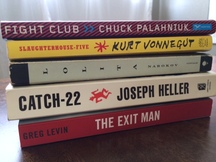
Chuck Palahniuk
“At the time, my life just seemed too complete, and maybe we have to break everything to make something better out of ourselves.” (Fight Club)
“On a long enough time line, the survival rate for everyone drops to zero.” (Fight Club)
“Today is the sort of day where the sun only comes up to humiliate you.” (Fight Club)
“I don't want to die without any scars.” (Fight Club)
“It's only in drugs or death we'll see anything new, and death is just too controlling.” (Survivor)
“People used what they called a telephone because they hated being close together and they were too scared of being alone.” (Survivor)
“All God does is watch us and kill us when we get boring. We must never, ever be boring.” (Invisible Monsters)
“In a world where billions believe their deity conceived a mortal child with a virgin human, it's stunning how little imagination most people display.” (Rant)
“What if reality is nothing but some disease?” (Rant)
Kurt Vonnegut
“And I asked myself about the present: how wide it was, how deep it was, how much was mine to keep.” (Slaughterhouse-Five)
“How nice -- to feel nothing, and still get full credit for being alive.” (Slaughterhouse-Five)
“Seems like the only kind of job an American can get these days is committing suicide in some way.” (Breakfast of Champions)
“Earthlings went on being friendly, when they should have been thinking instead.”
(Breakfast of Champions)
"Maturity is a bitter disappointment for which no remedy exists, unless laughter can be said to remedy anything." (Cat's Cradle)
"All persons, living and dead, are purely coincidental." (Timequake)
Bret Easton Ellis
“I'm into, oh murders and executions mostly. It depends.” (American Psycho)
“Disintegration – I'm taking it in stride.” (American Psycho)
“There’s no use in denying it: this has been a bad week. I’ve started drinking my own urine.” (American Psycho)
“I don't want to care. If I care about things, it'll just be worse, it'll just be another thing to worry about.” (Less Than Zero)
“And as the elevator descends, passing the second floor, and the first floor, going even farther down, I realize that the money doesn't matter. That all that does is that I want to see the worst.” (Less Than Zero)
“I only had sex with her because I'm in love with you.” (The Rules of Attraction)
Vladimir Nabokov
“You can always count on a murderer for a fancy prose style.” (Lolita)
“He broke my heart. You merely broke my life.” (Lolita)
“Human life is but a series of footnotes to a vast obscure unfinished masterpiece” (Lolita)
“All the seven deadly sins are peccadilloes but without three of them, Pride, Lust, and Sloth, poetry might never have been born.” (Pale Fire)
“I cannot disobey something which I do not know and the reality of which I have the right to deny.” (Pale Fire)
“Some people – and I am one of them – hate happy ends. We feel cheated. Harm is the norm. Doom should not jam. The avalanche stopping in its tracks a few feet above the cowering village behaves not only unnaturally but unethically.” (Pnin)
Joseph Heller
“Be glad you're even alive. Be furious you're going to die.” (Catch-22)
“The Texan turned out to be good-natured, generous and likable. In three days no one could stand him.” (Catch-22)
“He was going to live forever, or die in the attempt.” (Catch-22)
“The enemy is anybody who's going to get you killed, no matter which side he is on.” (Catch-22)
“I frequently feel I'm being taken advantage of merely because I'm asked to do the work I'm paid to do.” (Something Happened)
“I know at last what I want to be when I grow up. When I grow up I want to be a little boy.” (Something Happened)
And sorry folks, I just couldn’t resist the opportunity for a little self-promotion…
Greg Levin
"Suicide should come with a warning label: 'Do not try this alone.'" (The Exit Man)
“One week I’m helping to end a life, the next I’m stepping in to save one. Seemingly dichotomous acts, but actually one in the same.” (The Exit Man)
“She had become an integral part of my life – just not the part with all the death.” (The Exit Man)
“It’s best to discuss mass murder behind closed doors, and Jenna lived the closest.” (Sick to Death – available soon!)
“Learning he might not be dying really threw a wrench into Gage’s plans. He didn’t see how he could go on killing if there was a chance he’d go on living.” (Sick to Death)
“He never praised me whenever I’d hit a home run in little league, but I kill a few people and all of the sudden I’m his idol.” (Sick to Death)
Feel free to join in on the fun and post one or two of YOUR favorite lines from a book of dark and/or comedic fiction. Or hell, ANY kind of book. (Super-extra bonus points if it’s from one of MY books.)